
Written by Dan Beaver
Anyone who has participated in organized sports knows the importance of having the right coach, but good coaches are not born with innate skill. Years of training, hands-on experience, and knowledge of their specific sport, often after decades of competing at a high level, inform their advice to their students.
And while mechanical skills are most often acquired through insanely hard work, there is more that goes into being the best in this field.
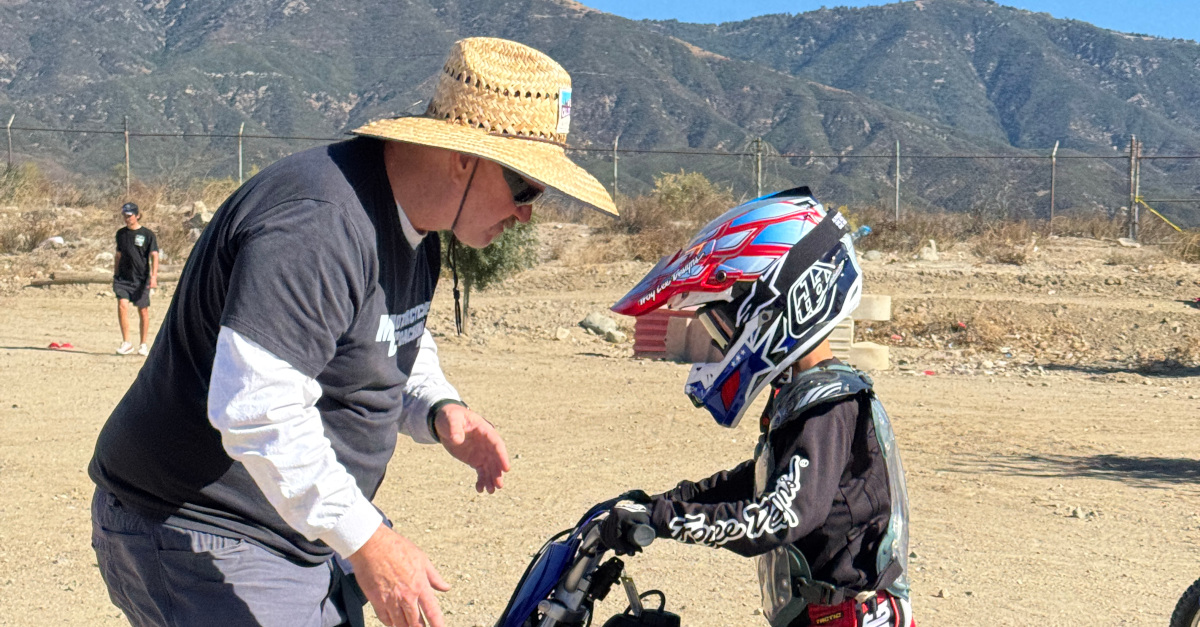
In amateur dirt bike racing, coaches not only need to know how to ride, they also need to know how to teach and guide their riders safely. It is at this juncture that the United States Motorcycle Coaching Association (USMCA) has placed itself.
“We are twofold,” stated Lindsey Scheltema, Executive Director of the USMCA, “we certify coaches across the country, and we connect riders to certified coaches.”
“We want to set a standard in the sport. Our vision would be for all tracks, all facilities, all organizations that put on events and closed course competitions to utilize USMCA coaches when handing out credentials, allowing access on track, or entering the facility.”
Coaches have multiple roles. In addition to teaching riding skills, they are also what Scheltema describes as the “first line of defense when anybody is on the track.”
To become certified by the USMCA, coaches must go through CPR and first aid training. They are tested on their knowledge of how to detect concussions, heat illness, and cardiac issues.
All forms of motorsports have inherent risks. That is why getting trained from a proper coach is important. It teaches you the skills you need to navigate challenging situations as your speed and skill grow. Getting properly trained also helps riders better avoid crashes or incidents while racing.
If a rider is injured, this is where USMCA’s first line of defense comes in.
“Our coaches have been trained on how to detect concussions.” Scheltema said. “They have gone through training to be able to see if a rider might have heat illness or is on the brink of dehydration. These safety measures are important standards in our industry. Knowing when to perform CPR or when to take a helmet off helps keep our riders safe until medical staff can arrive.”
Many riders start their training at a young age, some before they start elementary school. Training offers kids a valuable opportunity to develop discipline and a sense of responsibility.
“The kids want to ride, they have so much fun doing it, and as coaches, we teach them not only riding skills, but also about the risks they face and what they can do to lower those risks,” Scheltema said. “From wearing proper safety gear, to following track rules, showing proper etiquette, and learning to be accountable for their behavior — the kids know if they don’t do these things, they don’t ride. Soon these good behaviors become good habits that they’ll have for life.”
USMCA certified coaches must pass rigorous national-level background screening, the same standards most USA sporting organizations use today to help protect our youth.
Currently USMCA has more than 400 coaches who have completed the certification process. In an ever-shifting landscape, that represents about 60 percent of existing closed-course competition and advanced recreation coaches. Scheltema anticipates growth to continue.
“Coaches know that being USMCA certified strengthens their professional credibility and that more parents and serious racers are looking for this certification,” Scheltema said. “Also, like traditional stick and ball sports, USMCA coaches also receive benefits, such as special access areas to get better viewing to support their riders. It’s important that we treat the coaches of our sport in a way that allows them to be there to support the riders for years to come.”
While the certification bolsters a coach’s credibility, it’s more than something to add to one’s resume. The focus on safety in amateur motorcycle racing has in many instances made this accreditation necessary.
For example, coaches who participate in AMA sanctioned events must be accredited by the USMCA.
“Our gold standard is the USMCA,” said Mike Burkeen, American Motorcycle Association’s Deputy Director of Racing. “That’s what the USMCA was created for with the certified coaches, and any AMA event that we sanction that has coaching involved, the coaches have to be USMCA certified.”
Many reputable training facilities also employ USMCA-certified coaches. One such facility is ClubMX in Chesterfield, South Carolina. This facility hosts young riders and since they also field a SuperMotocross team, can guide those who are capable all the way to the professional ranks.
When asked about the efficacy of USMCA’s curriculum, Hayden Justice, one of ClubMX’s trainers, said, “It gave me the guidelines and the tools to start a good way of thinking and communicating with other riders and parents on just how to approach things.”
Holding its first meeting in October 2016, USMCA has experienced steady growth.
“We studied other sports facing challenges similar to motorcycling that have been experiencing more growth and appear better positioned to attract new participants,” said USMCA board member Jon-Erik Burleson in the news release announcing the organization’s formation. “We learned that the leaders in skiing, snowboarding and cycling believed well-established coaching programs were paramount to their success.”
USMCA is also supported by leaders in the motorcycle racing world, drawing from their experience and expertise as the organization grows. AMA Director of Racing Mike Pelletier is a member of the advisory group. Industry executives Dave Prater, Vice President of Supercross at Feld Motor Sports, and Tim Cotter, Vice President of Operations for MX Sports, have been key supporters.
Safety in dirt bike racing demands a multi-tiered approach.
The evolution of safety equipment and rules garner the most attention, but those are rendered less effective without the proper skills that come with coaching. USMCA’s brigade of coaches provide the starting point for these safety implementations – the first line of defense.